Beyond "Tears for Fears"
Fear begets
anger. Anger begets hate. Hate begets suffering.
To a great extent, the violence in Asia and elsewhere
in the world is but a reflection of this truism. Rooted in the overt
desire for power and anxiety over the unknown, the State and its
unscrupulous minions abducted, tortured and "physically eliminated"
countless desaparecidos - turning the very citizens they were sworn
to protect into victims of their own aggression.
But as French philosopher Michel Foucault once observed
that power creates its own mode of resistance, so does disappearance
animate new persons and individuals in the struggle for justice. Divided
by territorial borders, languages and divergent cultural origins, they are
nonetheless united by the same ideals of righteousness and the same
concern for the disappeared.
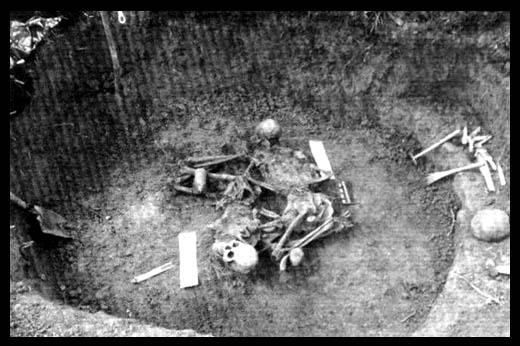
From the bowels of the earth. Exhumation has become
a powerful weapon in the fight for truth, justice, and redress. Utilizing
the assistance and expertise of well-intentioned anthropologists, this
endeavor has forged a powerful bond between the human rights community in
the struggle of the desaparecidos and their families.
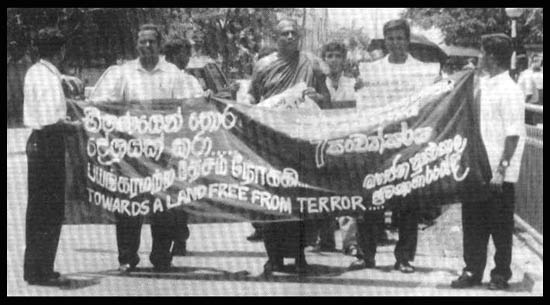
Human rights campaign in the streets. Members of
the Organization of Parents and Family Members of the Disappeared (OPFMD)
stage a demonstration in Colombo to denounce involuntary disappearance.
With more than 60,000 cases, Sri Lanka has become the country with the
most number of enforced disappearances perpetrated at the height of the
JVP rebellion in the 1970s and 80s.

Undaunted courage. Never allowing themselves to
be cowed by their so-called masters - whether in civilian attire or
military uniform - Thais continue the legacy of the may 1992 heroes alive,
preserving the gains of democracy and placing emphasis in the
indivisibility of human rights.
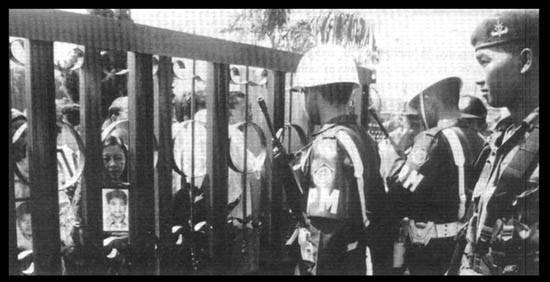
Konfrontasi. Families of desaparecidos
stage a demonstration in front of the Military Police BAse in Medan,
Merdeka, Barat, Jakarta, as members of the security force look on. Under
Suharto, Indonesia became synonymous with human rights violations, while
his children turned government funds into personal playthings. Placed at
the political backburner after the strongman's fall, the military may
again see happy days with Megawati firmly in the presidential saddle.
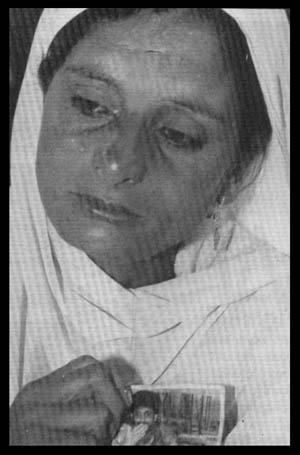
Two portraits. A woman holds a photo of her
missing relative during a gathering in Kashmir. Her face soaked in tears,
she is a poignant picture of sadness, while the portrait that she clutches
exudes youth and vitality, cheerfulness and promise.

Children's crusade. In the Philippines, even the
sons and daughters of the disappeared have become a pivotal part in the
struggle for justice. Barely toddlers when their parents were abducted,
they have taken upon themselves to search for their loved ones and address
the ills in their own social milieu.
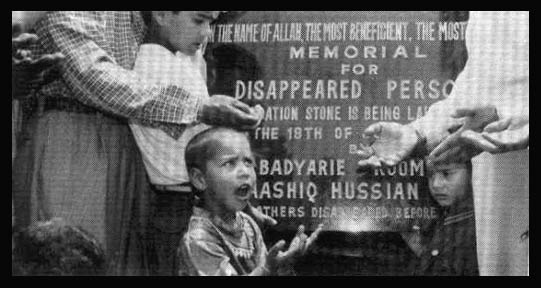
Suffer the little children. Begging for answers,
this child confronts his elders during the foundation laying
ceremony of a monument dedicated to all the disappeared persons in the
Kashmir region. A few hours after the ceremony, under the cover of
darkness, Indian police took the stones, accusing the organizers of
trespassing in government property. Just another sad episode in Kashmir's
all-too-silent war.
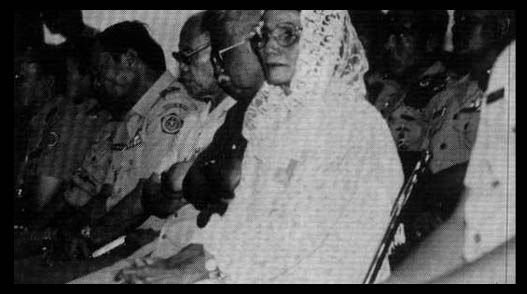
In odd company. A mother of an Indonesian
desaparecido sits alongside a row of military personnel during the
trial of her son's abductors. Members of the dreaded Commandos, the
suspects were found guilty by a court martial but were only given light
penalties. Her son, however remains missing.
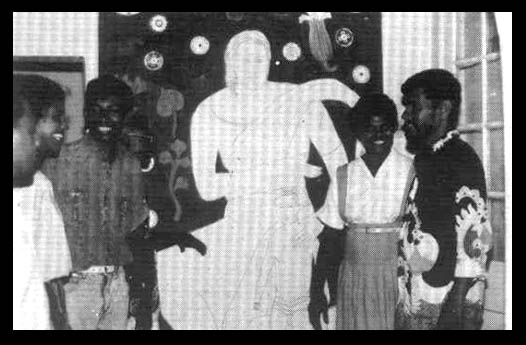
Mother and child. Human rights advocates display
a portrait in Colombo Town Hall as a way of remembering the disappeared.

Twenty years of solicitude. Members of the Latin
American Federation of Associations of Relatives of Disappeared Detainees
(FEDEFAM) stage a picket in front of the Colombian Embassy in
Venezuela. In existence for more than two decades, FEDEFAM has been
at the forefront of human rights advocacy at the international level.
